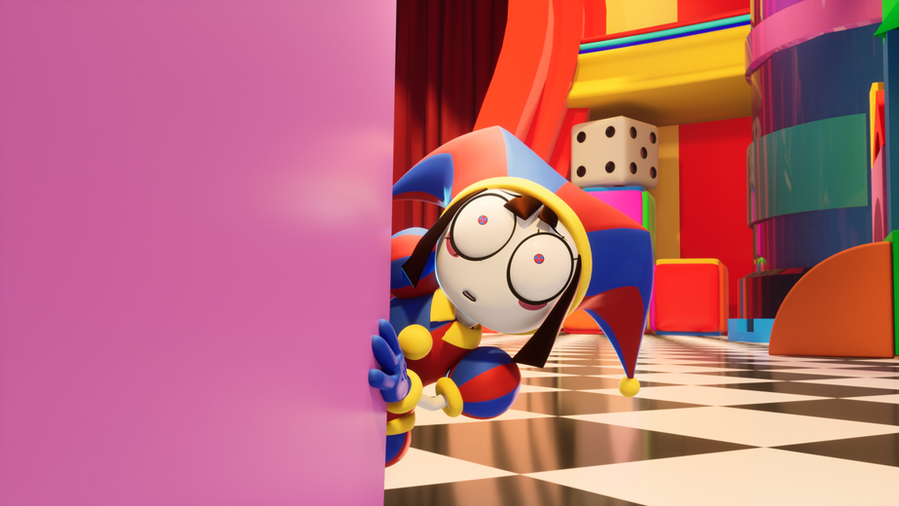
Zooble-related Digital Circus official visual materialZooble

Mix-and-match geometric avatar

The Amazing Digital Circus - Zooble Character Profile

Zooble gives the story an important lens: refusal is not laziness. In a world where participation is forced, refusing the game can be a rational survival strategy. Their body theme also makes them central to avatar identity, consent, and Caine's misunderstanding of comfort.

First appearance
Episode 1: Pilot
Voice actor
Ashley Nichols
Current status
Resistant participant
Stability
Detached but clear-eyed
Read related explained essay →

Zooble's refusal pattern starts in the Pilot episode guide, but the stronger context arrives in The Mystery of Mildenhall Manor. That episode makes their body discomfort and resistance to forced participation feel like character evidence rather than a running gag.

For analysis, read the Mildenhall Manor explanation of Zooble, Caine, and forced participation. It pairs well with Beach Episode, where distrust of Caine's adventure framing looks increasingly justified.

first AppearanceEpisode 1: Pilot
voice ActorAshley Nichols
avatar TypeMix-and-match geometric avatar
key SymbolBody parts and refusal
signature ItemAsymmetrical modular body
color MotifCyan, pink, yellow
current StatusResistant participant
circus StabilityDetached but clear-eyed
known RelationshipsCaine, Gangle, Pomni, Ragatha

Canonical facts

Confirmed in the show

  • Zooble often resists participating in Caine's adventures.
  • Their body design is modular, asymmetrical, and visibly unstable.
  • Mildenhall Manor gives clearer context for Zooble's discomfort and Caine's failure to solve it.
  • Zooble is one of the strongest voices of refusal in the cast.

Editorial analysis

Our reading

Zooble gives the story an important lens: refusal is not laziness. In a world where participation is forced, refusing the game can be a rational survival strategy. Their body theme also makes them central to avatar identity, consent, and Caine's misunderstanding of comfort.

Fan theory

Speculation, clearly marked

Zooble theories often connect modular body discomfort to identity, dysphoria, or consent inside avatar systems. These readings can be valuable, but they need to stay separate from confirmed plot fact.

Character reading notes

Why Zooble matters to the story

Zooble's profile centers refusal, body discomfort, and consent rather than treating them as a background joke. They are one of the clearest characters for showing that not wanting to participate in Caine's adventures can be a rational response to being trapped.

The Mildenhall Manor episode guide is especially important because it gives stronger context for Zooble's conflict with Caine. The point is not that Caine fails to invent the correct activity; the point is that he keeps trying to solve discomfort without fully listening to the person experiencing it.

Zooble's evidence works best when canon, analysis, and theory stay distinct. It is confirmed that Zooble resists participation and has a modular body design. It is analysis to connect that design to identity and bodily autonomy. It is fan theory to claim a specific real-world metaphor is officially intended.

Episode appearance timeline

Zooble's story beats

  1. Episode 1: Refusal pattern appears early.
  2. Episode 3: Therapy-room material gives stronger context for body discomfort and Caine conflict.
  3. Episode 6: Support for Gangle shows Zooble's care can appear through blunt honesty rather than softness.
  4. Episode 7: Group frustration validates Zooble's distrust of Caine's adventures.

Relationships

How this profile connects to the cast

  • Caine: repeated conflict around participation and body comfort.
  • Gangle: later support and validation.
  • Pomni: shared trapped status with different coping strategies.
  • Ragatha: group connection under strain.