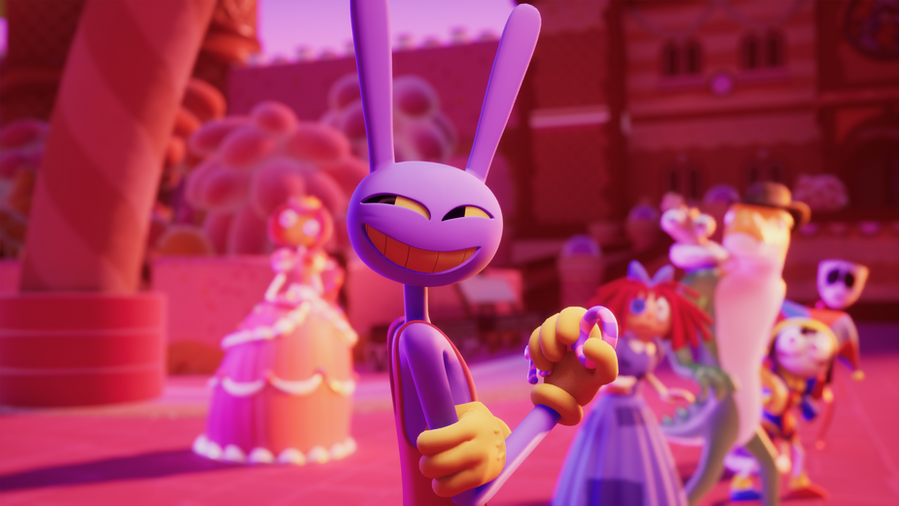
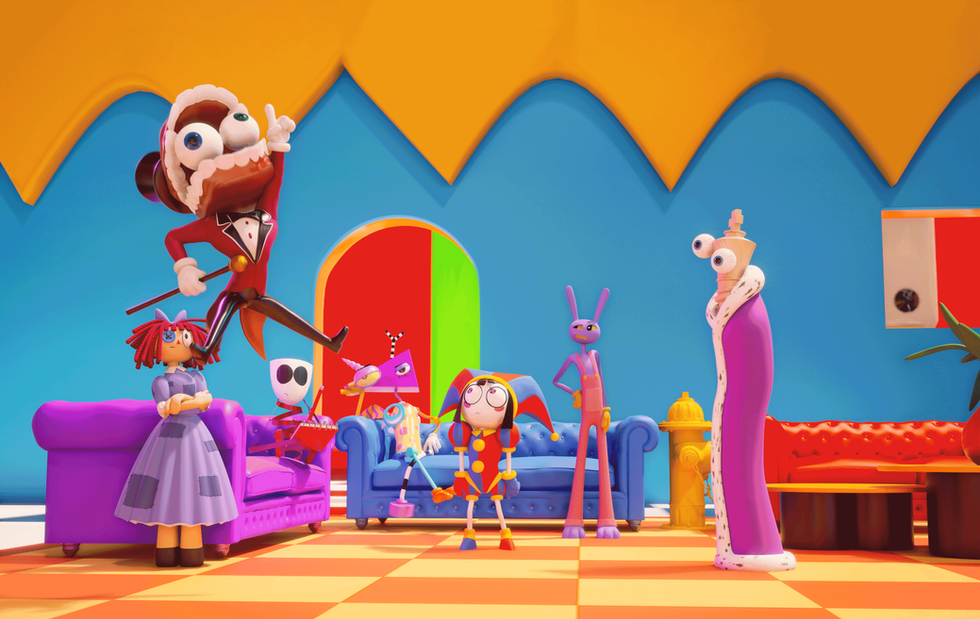
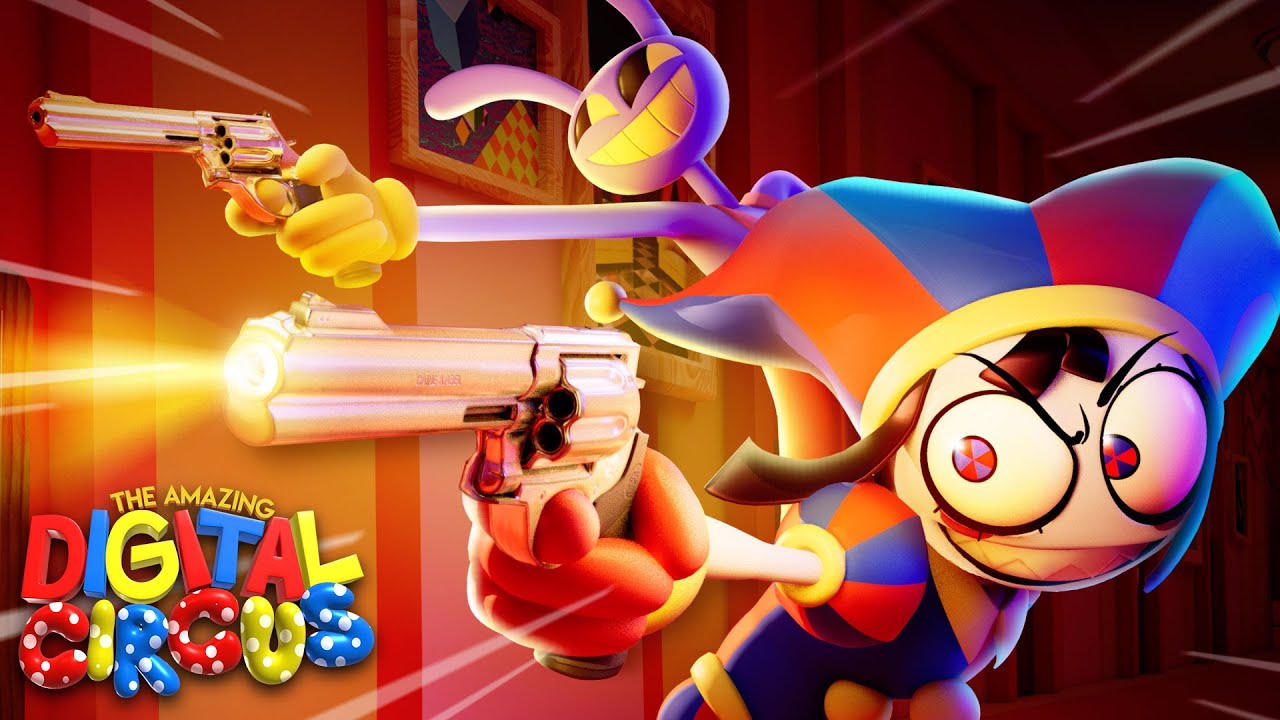
Official YouTube thumbnail for The Amazing Digital Circus Episode 6 They All Get GunsEP 06

Episode 06 · Official companion

The Amazing Digital Circus - Episode 6 They All Get Guns Guide

Release
Aug 15, 2025
Runtime
33:53
Views
149M+
Status
Volatile escalation

They All Get Guns uses an absurd action premise to explore desensitization, role-play, Jax's panic under cruelty, and Caine's emotional collapse when entertainment stops earning trust.

Created, written, directed, and scored by Gooseworx

Read explained companion →

Official Episode

Watch the original animation

Quick Context

What this episode is really about

They All Get Guns uses an absurd battle premise to expose panic, role-play, and approval hunger. The episode matters because Pomni experiments with Jax-like detachment while Jax's own emotional mask begins to crack.

Episode 6 is a major Jax episode and a major Caine episode. It turns comedy escalation into evidence about how characters perform confidence when they are frightened.

Plot Overview

They All Get Guns in our own words

They All Get Guns uses an absurd premise to make trust measurable. Caine sets up a private-room exercise where characters are supposed to empty a loaded gun before handing it to someone else. The rules are ridiculous, but the emotional question is serious: after everything that has happened, does anyone in the Circus expect another person to protect them when betrayal would be easier?

The Favorite Character Awards framing is not just a side joke. It keeps Caine's need for approval visible throughout the episode. He wants the cast to participate, wants the audience-like committee to validate him, and wants the adventure to feel exciting. That makes the page a strong companion to Caine's profile on approval hunger and failed caretaking.

Pomni and Jax are the central pairing. Jax argues that the cast are becoming cartoon archetypes inside the machine, while Pomni pushes back by insisting they are still people. The episode briefly lets Pomni try on Jax's detached style, but it does not reward that style as wisdom. Instead, it shows how quickly emotional self-protection can become harm.

Jax receives some of his clearest pre-finale evidence here. He is funny, cruel, observant, and visibly rattled when the jokes turn toward his own insecurity. His fear of corn is minor on the surface, but the larger pattern matters more: when the group asks for sincerity, he turns the scene back into defense. That is why Jax's profile on panic beneath cruelty should be linked from this guide.

Zooble and Gangle get a different kind of trust story. Gangle admits she does not fully trust herself with a weapon, and Zooble keeps it safe. Later, Zooble's advice about choosing to love the real self gives Gangle one of her clearest emotional supports after Fast Food Masquerade. This is a natural continuation from Gangle's mask and self-worth profile.

Ragatha's conversation with Kinger prevents the episode from becoming only a Jax/Pomni page. She admits that trying to stay on Pomni's good side can become a pressure loop. Kinger answers with one of his grounded moments, explaining that relationships cannot be held together by one person doing all the emotional work.

The ending conflict matters because Pomni names something the audience has been tracking since the Pilot: Jax's jokes are not harmless when they train people not to care. The episode stops short of fully explaining him, which is the correct boundary for this guide. The deeper reading belongs in the They All Get Guns explained page on Jax panic, Pomni's detached role, and Caine's vote failure.

Story and Character Analysis

How the episode moves the Circus arc forward

The joke premise reveals real panic

They All Get Guns uses an absurd title to disarm the audience, but the episode is one of the strongest tests of performance under stress. The adventure gives the cast a battle premise, yet the more important conflict is emotional: Pomni tries on detachment, Jax's panic becomes harder to hide, and Caine's need for approval becomes unusually visible.

Jax is the obvious character anchor. His cruelty still matters, but Episode 6 makes it harder to pretend cruelty is the whole story. The Jax profile on Episode 6 panic beneath cruelty continues that reading with a clearer split between harm, coping, and theory.

Caine's approval problem is the other major clue. He controls the setting, but still wants the cast to validate the experience. That contradiction supports the Caine profile on approval hunger, AI limits, and C&A theory boundaries, especially when weighing villain, caretaker, and unstable system-host readings.

The They All Get Guns video explanation of Jax panic, Pomni's detached role, and Caine's vote failure expands the character implications without turning C&A speculation into stated fact.

Characters in This Episode

Appearance notes and state changes

Jax avatar

Jax

Turns emotional avoidance into aggression, then reveals panic beneath the performance.

Pomni avatar

Pomni

Tests a more aggressive role and learns that copying Jax's detachment has consequences.

Ragatha avatar

Ragatha

Faces rejection anxiety more directly through her pairing and later reconnection with Pomni.

Gangle avatar

Gangle

Benefits from Zooble's support and shows a different kind of participation under pressure.

Caine avatar

Caine

Escalates entertainment into a non-lethal battle royale and breaks when the popularity logic turns against him.

Canon Details

Confirmed evidence, fallout, and continuity notes

Confirmed facts

  • The adventure gives the cast non-lethal weapons and frames conflict as entertainment.
  • Pomni tries on a harsher, more detached role instead of reacting only as herself.
  • Jax's fear becomes visible beneath his usual cruel performance.
  • Caine's need for approval is exposed through the vote/award-show material.

Character fallout

  • Pomni learns that borrowing Jax's coping style does not make her safer.
  • Jax becomes one of the most theory-heavy characters because the episode reveals panic under cruelty.
  • Ragatha's insecurity around Pomni and Jax becomes harder to ignore.
  • Caine's emotional immaturity becomes more obvious when the cast does not validate him.

Continuity notes

  • This episode should be linked to Jax's later finale material.
  • Caine's no-vote humiliation is useful evidence for his profile.
  • The non-lethal premise keeps physical stakes lower while increasing emotional stakes.
  • Pomni's performance shift helps explain why she is not a static viewpoint character.

Key Moments and Hidden Details

Signals worth tracking on rewatch

  1. The Favorite Character Awards frame Caine's approval hunger before the trust exercise even starts.
  2. Zooble hiding from Caine reinforces their refusal pattern and the show's growing conflict around forced participation.
  3. The gun-room rules make trust literal: each pair has to decide whether betrayal is expected or chosen.
  4. Pomni and Jax's team-up tests whether detachment can protect Pomni from emotional pain.
  5. Zooble's self-love conversation gives Gangle a clearer model for choosing an unstable but real self.
  6. Ragatha's talk with Kinger reframes her fear of losing Pomni as pressure she places on herself.
  7. The final betrayal argument between Pomni and Jax sets up the finale's more painful Jax material.

Audience Questions

Search questions answered by this guide

Is Episode 6 only a joke episode?

No. The title is a joke, but the story uses escalation to show how characters hide fear behind performance, aggression, or spectacle.

What does the episode reveal about Jax?

It reveals that his cruelty is not the whole story. His panic does not excuse his behavior, but it makes his survival strategy more legible.

Why does Caine's vote matter?

It shows that Caine wants approval from the people he controls. That contradiction is central to reading him as a failed caretaker.