
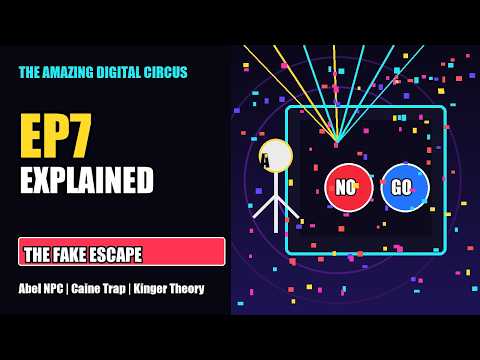
 EP 07
EP 07Original video explanation
The Amazing Digital Circus - Episode 7 Explained
Episode 7 Explained: The Fake Escape
Official Beach Episode guide →EP 07Original video explanation
Episode 7 Explained: The Fake Escape
Official Beach Episode guide →Watch the explanation
Quick Answer
Beach Episode is not filler; it is a fake rest stop that weaponizes hope. The beach looks like relief, but the escape-shaped scenario makes Pomni and the group question whether any simple exit can be trusted after Caine turns comfort into another test.
Video Chapters
Episode 7 sets up the truth and then twists it
Abel appears to confirm C&A theories
The Chinese-style room Caine refuses to enter
Abel, admin permissions, and escape-plan logic
Kinger programmer clues return
The office key and control room
Red button versus blue button choice
Abel is revealed as an NPC
Caine's ability to modify thoughts
Forgotten names and abstraction clues
Jax presses buttons and sees reality flashes
Why Jax refuses the return-to-reality path
Detailed Analysis
Beach Episode uses a relaxing title to set up one of the show's cruelest emotional moves. The video reads the first half as a deliberate lore trap: Abel appears, C&A theories seem confirmed, Kinger's programmer clues return, admin permissions appear, and the control-room path looks like the long-awaited escape structure. Then the episode reveals that Abel is an NPC created for Caine's adventure.
That twist does not make the clues worthless. It teaches the audience how the Circus can manufacture confirmation. The Beach Episode guide on the fake escape, button choice, and Caine trust damage gives the canon sequence, while Pomni's profile on exit-door trauma and false-escape pattern recognition explains why Pomni's hesitation is learned intelligence rather than simple fear.
Caine's most harmful choices often come from a failure to understand emotional consequence. A fake threat is bad enough, but a fake escape is worse because it uses the cast's deepest need as adventure material. The forbidden room, permission language, and control-room interface make the scenario feel mechanically serious, which is why the betrayal lands harder.
The red and blue buttons are useful because they turn trust into action. Jax pressing the buttons and seeing reality flashes gives the episode its sharpest character-theory moment: if returning to reality means facing guilt, then refusing escape can be self-protection rather than pure nihilism. The Jax profile on reality flashes, guilt theory, and defensive cruelty is the natural continuation for that thread.
Abel-adjacent questions still matter, but the NPC twist forces caution. The episode proves that Caine can script an escape story convincing enough to exploit real hope. The larger C&A or Abel origin theories become stronger only when later evidence separates real system history from Caine's staged adventure logic.
Evidence Ledger
Our reading treats Episode 7 as the direct sequel to the Pilot's false exit. Pomni's hesitation is not weakness; it is learned pattern recognition. The beach setup also matters because it shows that the Circus can imitate relief just as easily as it imitates danger. That makes the episode a strong internal-link bridge between Caine analysis, Pomni's exit-door trauma, and later finale questions about whether escape is a mechanical puzzle or a trust problem.
Key Questions Answered